Toyota reinvents its long-running three-row Highlander with all-electric power, up to 338 horsepower, and an estimated 320 miles of driving range.
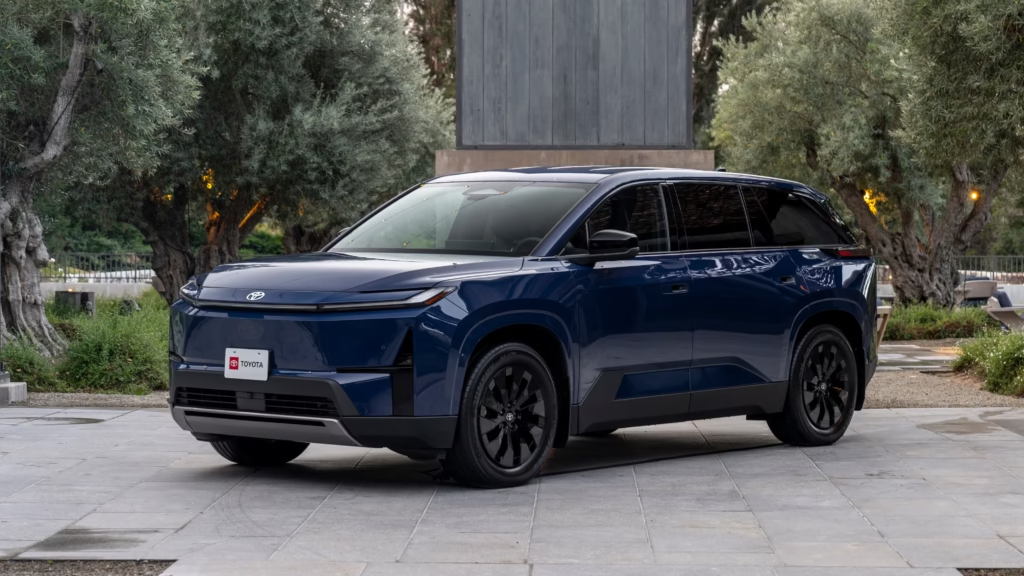
Toyota is ushering the Highlander into a new chapter. For 2027, the familiar mid-size SUV abandons gasoline and hybrid engines entirely, adopting a battery-electric setup for its fifth generation. Set to arrive in showrooms toward the end of 2026, the all-new Highlander EV will compete directly with electric three-row rivals such as the Kia EV9 and Hyundai Ioniq 9. Pricing is expected to begin somewhere in the mid-$50,000 range.
Fully Electric Power, No Gas Required
Built on an updated version of Toyota’s TNGA-K platform, the 2027 Highlander EV will be offered in XLE and Limited trims.
Battery and Drivetrain Options
- XLE Front-Wheel Drive (FWD)
- 77-kWh battery
- 221 horsepower
- 198 lb-ft of torque
- Estimated range: 287 miles
- XLE All-Wheel Drive (AWD)
- Available with 77-kWh or 96-kWh battery
- Dual-motor setup
- 338 horsepower
- 323 lb-ft of torque
- Estimated range: 270 miles (77-kWh)
- Up to 320 miles (96-kWh)
- Limited AWD (Standard AWD + 96-kWh battery)
- 338 horsepower
- Up to 320 miles of range
The dual-motor AWD system mirrors the setup found in Toyota’s smaller bZ electric SUV. While official acceleration numbers haven’t been published, AWD versions are expected to outperform the outgoing gas-powered Highlander’s 0–60 mph time of 7.2 seconds.
AWD models also feature terrain-specific drive modes and Crawl Control, allowing the vehicle to manage throttle and braking at low speeds for improved off-road capability.
Charging and New Tech Features
The Highlander EV uses a standard NACS charging port, giving drivers access to a wide charging network.
- DC fast charging: 10% to 80% in about 30 minutes
- 11-kW onboard AC charger
- Included 120V/240V charging cable
A standout feature is vehicle-to-load (V2L) capability, a first for Toyota in the U.S. This allows the SUV to power appliances or serve as a temporary backup energy source during outages.
Larger Size, Bolder Design
The new Highlander embraces a more squared-off, modern look. Chunky fenders, sharp creases, and full-width daytime running lights emphasize its width and connect it visually to Toyota’s growing EV lineup.
Dimension changes compared to the previous generation include:
- Nearly 1 inch lower roofline
- 2.3 inches wider
- Almost 4 inches longer overall
- Approximately 8 inches longer wheelbase
Rectangular taillights wrap around the rear corners, and Limited trims can be ordered with a two-tone paint scheme featuring a black roof and available 22-inch wheels.
Modern Interior with Big Screens
Inside, the Highlander EV adopts a high-tech layout while maintaining user-friendly controls.
Key Interior Highlights
- 14.0-inch central touchscreen
- 12.3-inch digital instrument cluster
- 5G connectivity
- Wireless Apple CarPlay and Android Auto
- Dual Bluetooth phone pairing
- Built-in “Drive Recorder” dashcam system
Toyota retains physical buttons for climate control, drive modes, and audio volume—something many drivers will appreciate. The Limited trim adds a head-up display, ventilated front seats, and heated second-row seats.
Ambient lighting with 64 color options comes standard and integrates with Safe Exit Assist to warn passengers of approaching vehicles before opening doors.
Passenger and Cargo Space
The Highlander EV seats up to seven passengers. A second-row bench is available exclusively on the XLE AWD trim. SofTex synthetic leather upholstery is standard across the lineup, along with heated front seats and a heated steering wheel.
When the third row is folded flat, cargo capacity expands to more than 45 cubic feet. Toyota also focused on everyday practicality, including:
- 18 cupholders
- Multiple storage compartments
- Dual wireless charging pads
- USB-C ports for second and third rows
- Hands-free power liftgate
Buyers can upgrade to an 11-speaker JBL sound system and opt for a panoramic fixed-glass roof—the largest offered by Toyota.
To enhance cabin quietness, Toyota incorporated additional sound insulation, acoustic glass, and vibration dampers throughout the structure.
Safety and Connectivity
The Highlander EV comes equipped with a comprehensive driver-assistance suite, including:
- Pre-collision system with pedestrian detection
- Automatic emergency braking
- Adaptive cruise control
- Lane-departure alert with steering assist
- Blind-spot monitoring
- Automatic high beams
Through the Toyota smartphone app, owners can remotely precondition the battery, manage charging, and access Connected Services (initially included as a trial).
U.S. Production and Launch Timeline
The 2027 Highlander EV will be Toyota’s first electric vehicle assembled in the United States, produced in Georgetown, Kentucky. Its batteries will also be sourced domestically from Toyota’s new North Carolina battery facility.
Sales are expected to begin in late 2026 and continue into early 2027 as production ramps up.
Final Thoughts
With the 2027 Highlander EV, Toyota transforms one of its most recognizable SUVs into a fully electric family hauler. Offering competitive range, strong dual-motor performance, modern technology, and U.S.-based production, the Highlander is poised to become a key player in the growing three-row EV segment.
ALSO READ : 2027 Toyota Highlander EV vs 2026 Highlander : Electric Revolution or Familiar Favorite?